PPKE welcomed 29 students from partner institutions across Central and Southeastern Europe, including Comenius University in Bratislava, University of Graz, Ss. Cyril and Methodius University in Skopje, University of Novi Sad, and the University of Zagreb. Guest lecturers from within the CEEPUS network also joined the program, offering specialized presentations.
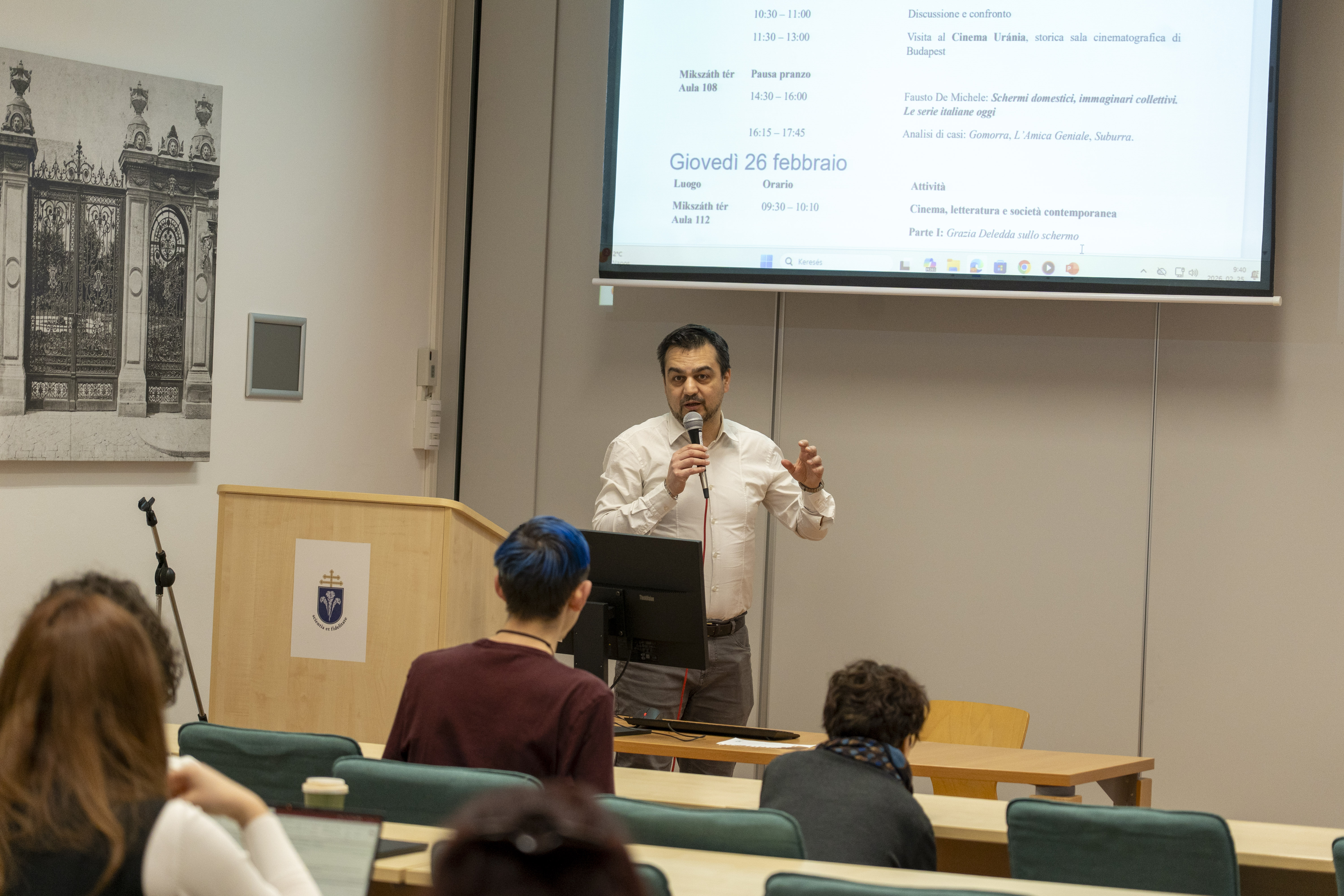
Cinema has traditionally played a central role in Italian culture, particularly through its enduring connections with literature. This dynamic interplay—between text and image, written narrative and visual representation—was at the heart of the course’s thematic focus. The week featured a rich combination of theoretical classes and practical workshops. Participants examined the process of film adaptation—how literary texts are transformed into visual language—and explored the history of Italian cinema. During a visit to the Italian Cultural Institute, students learned about early Italian film and watched a documentary on the origins of cinema in Italy.
The group also visited Budapest’s historic Uránia National Film Theatre, where discussions focused on differences between traditional art‑house cinemas and modern multiplexes. A hands‑on session at the University of Theatre and Film Arts (SZFE) provided an opportunity for students to work directly with an Italian specialist in storyboarding, try their hand at visual storytelling, and explore facilities where film and video production take place.
In addition to film‑focused activities, students also engaged with key figures of Italian literature, such as Grazia Deledda and Luigi Pirandello, as well as contemporary creators like Paolo Sorrentino and modern Italian television series. The creative projects produced by the participants—including concept ideas, storyboards, and short videos about Budapest inspired by Italian themes—showcased both talent and the importance of teamwork.
Beyond academic learning, the program fostered professional growth, strengthened the CEEPUS Network and helped participants form new connections and friendships within a dynamic, multicultural environment.