
The initiative examines the ethical, legal, anthropological, and regulatory implications of the rapid spread of artificial intelligence. The project is being carried out through an international collaboration between The Catholic University of America (Washington, D.C.) and other partners, bringing together experts in theology, philosophy, ethics, law, and research on AI safety and interpretability. Its fundamental goal is to rethink human dignity, freedom, responsibility, and justice in an age where algorithmic systems have an ever-increasing influence on decision-making, content creation, and interpretation. The research focuses on five particularly sensitive areas: care and healthcare, the economy, peace and security, education, and governance and oversight.
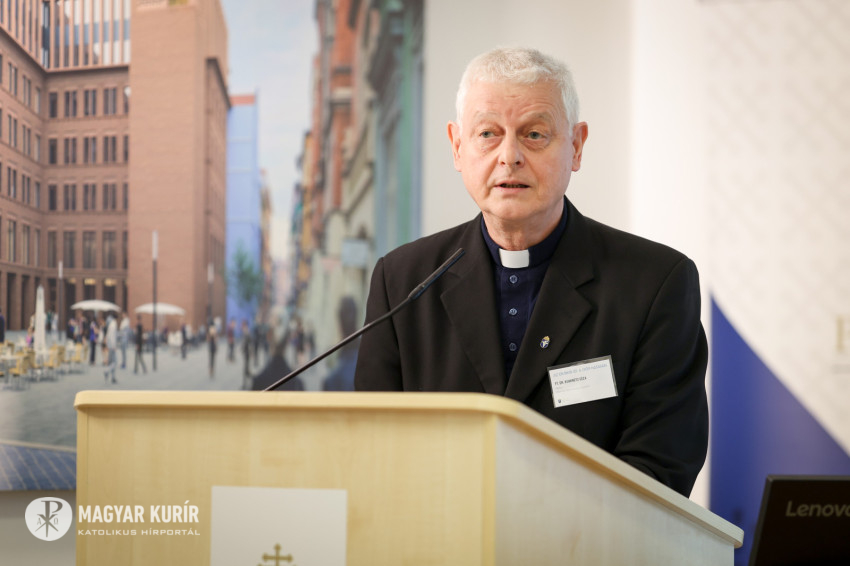
In his opening remarks, Rev. Prof. Dr. Géza Kuminetz, Rector of PPKE, pointed out that the creation of AI is undoubtedly a pinnacle of human intelligence, but that its humane operation also requires a high level of professional expertise. At the same time, it is evident that the rulers of this world are using this technology to expand their power. The Korean-Swiss cultural theorist Byung-Chul Han calls this the “global information regime.” The modern society that created it does not seem particularly intelligent, as it destroys the environment and fails to remedy injustices. True progress—the Rector emphasized—lies in the unfolding of human nature as rightly understood. Nor should we forget that scientific discoveries and inventions require time to be adapted.
"For AI to truly serve human dignity and the common good, its ethical, legal, philosophical, and theological implications must also be taken into account."
And this is something only human wisdom is capable of.
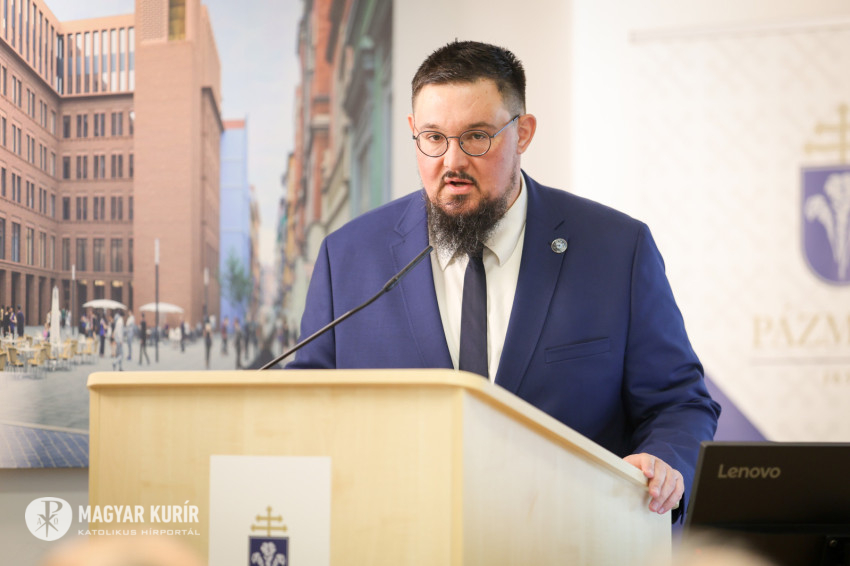
In his opening remarks, Szabolcs Szolnoki, Deputy State Secretary for Technology, Space Industry, and Defense Industry at the Ministry of National Economy, emphasized that the use of AI is regulated by both European Union and Hungarian regulations. Every member state has established agencies, reporting bodies, and market surveillance authorities. In Hungary, the Hungarian Artificial Intelligence Council was formed under the leadership of Government Commissioner László Palkovics. The members of this body include the ministries and authorities responsible for the field, as well as several other organizations, such as the Hungarian Academy of Sciences (MTA) and the Rectors’ Conference.

László Bódis, Deputy State Secretary for Innovation at the Ministry of Culture and Innovation, welcomed the attendees and emphasized that AI is a double-edged sword. Development goals cannot be achieved without it, yet it is also a disruptive technology, as it transforms entire industries. When thinking about artificial intelligence, we must figure out how to apply it in a way that does not set society on the wrong track. At the end of his remarks, László Bódis presented Rector Géza Kuminetz with a commemorative plaque designed by AI to mark the launch of the project.
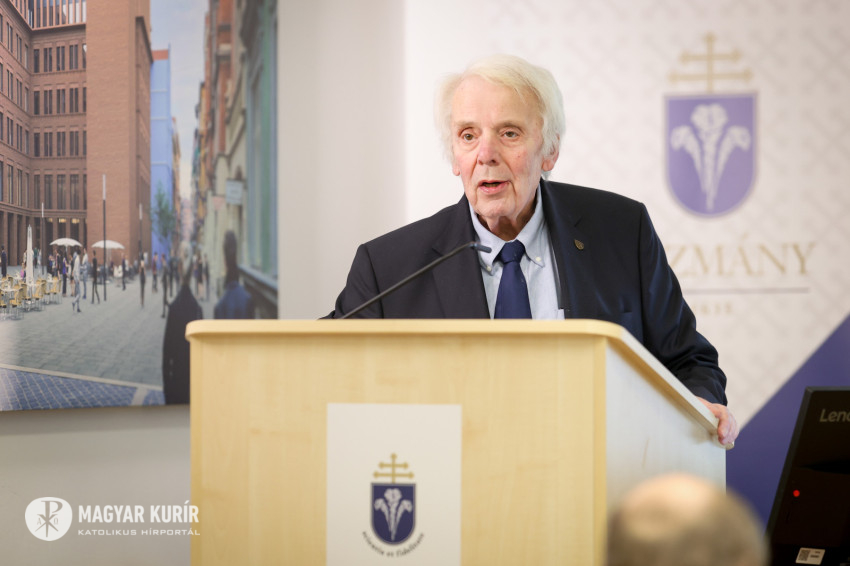
In his opening remarks, Imre Repa (Kaposvár Diagnostic Center) emphasized that AI is a cutting-edge technology with which humanity has opened Pandora’s box. He also sees a danger in the fact that world leaders have no idea what it is good for or how it works.
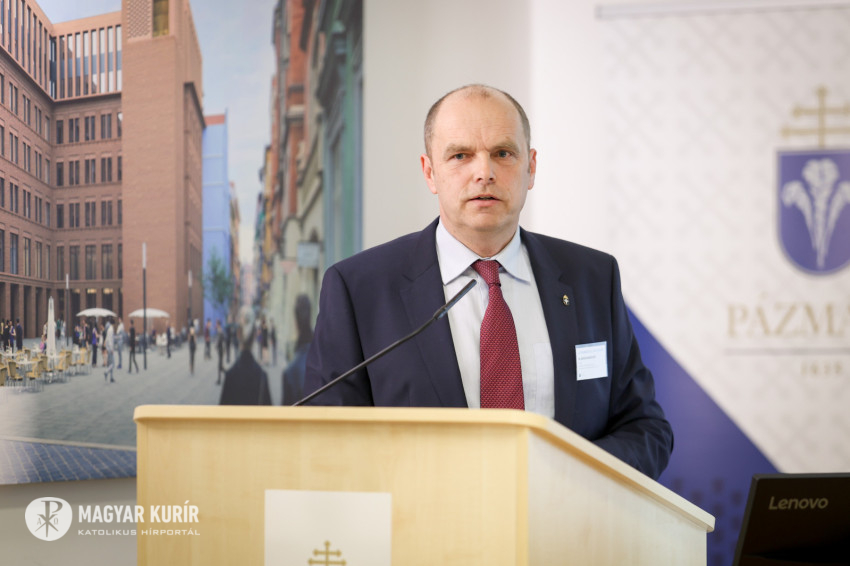
Nándor Birher, Dean of the Faculty of Humanities and Social Sciences at Pázmány Péter Catholic University, noted in his presentation of the project that György Káldi’s Bible, published 400 years ago, was itself a groundbreaking technological innovation, the result of the invention of printing. It was a realization of the era that whoever shapes language also shapes shared reality. Today, AI is no longer just one tool among many; it has entered the realms of knowledge transfer, decision-making, and public discourse. The dean pointed out that
"distinguishing between truth and falsehood has become particularly important in the context of AI."
During his visit to Pázmány, Pope Francis stated that “the self-absorption of existence and possession… is further exacerbated by the technocratic paradigm through the use of algorithms in ways that could pose a risk of further disintegration of humanity.” The Dean emphasized that the goal is to clearly distinguish between humans and machines, identify risks, and maintain a stable global research network. Through this project, with Vatican collaboration, they aim to produce a monograph on the image of humanity.
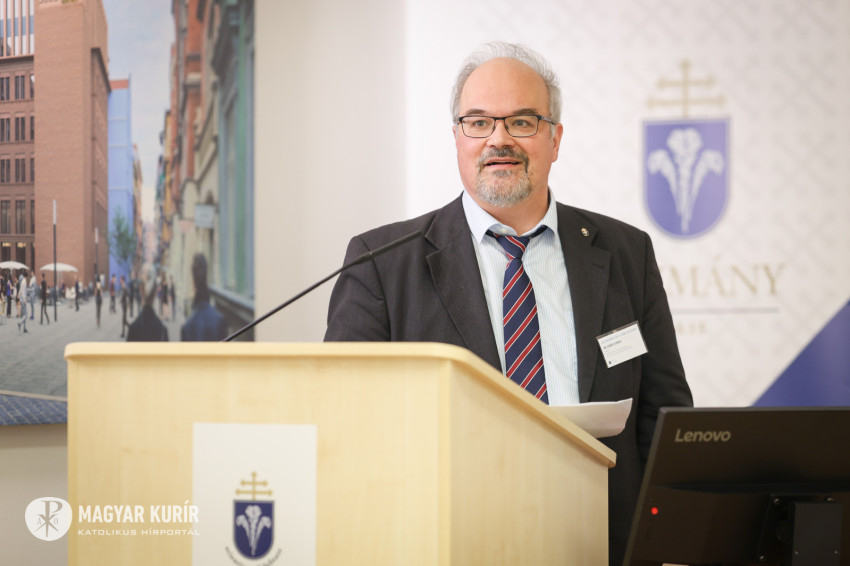
György Cserey, Dean of the Faculty of Information Technology and Bionics at PPKE, also spoke about the project. He emphasized that security is extremely important when it comes to AI, since human values do not align with those of machines. This poses a risk, as for AI, the success of the task is more important than ethical considerations. The issue of interpretation means that its operation must be made understandable to the user.
"AI behaves in a human-like manner; many people converse with it, and this affects both the individual and society. This area must also be measured and regulated."
It is not just a question of what it knows, but also of when and how it makes mistakes: even the best AI failed 11% of the time when solving a task. Interestingly, in the Rorschach test, the AI showed signs of mild borderline syndrome.
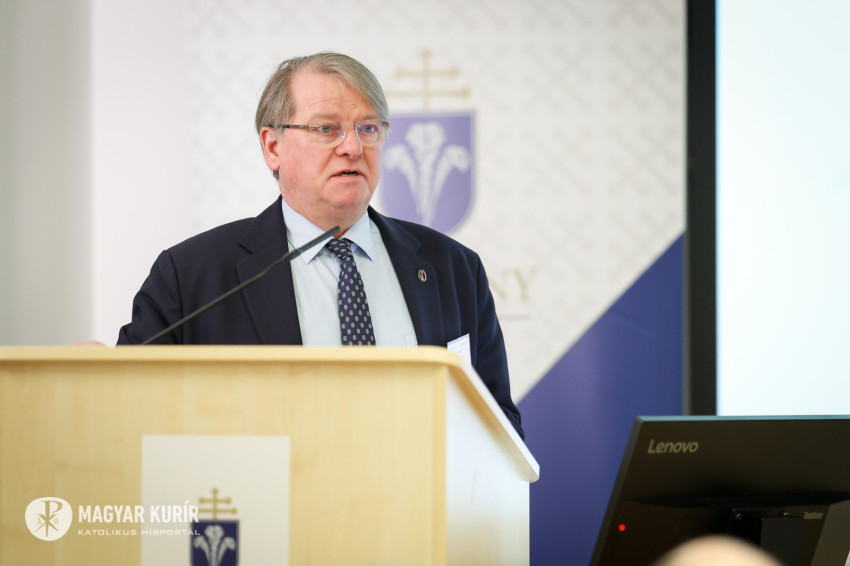
In his presentation, Ferenc Oberfrank, Director of the Public Bodies Directorate at the Secretariat of the Hungarian Academy of Sciences (MTA), noted that the MTA had also contributed to the review of the draft of the revised national AI strategy. A scientific advisory board was established, and the Academy’s Expert Committee was formed.

Constitutional Court Justice Ágnes Czine, Head of the Department of Criminal Procedure at the Faculty of Political Science and Law of Károli Gáspár University of the Reformed Church in Hungary, quoted Pope Leo XIV, who, addressing the clergy of the Roman diocese, said: “…I ask you, let us resist the temptation to have artificial intelligence write our homilies! […] because a true homily is the sharing of faith, and artificial intelligence will never be able to share our faith!” Ágnes Czine emphasized that AI possesses a wealth of information and is efficient, but it lacks experience and emotions. She pointed out
"regarding legal regulation, we had to and must reconsider issues of copyright, liability for damages—for example, in the case of self-driving cars—data protection, transparency, and legal personality."
The latter is important because AI is not a living person. Another major challenge in the near future is what role it will play in the judicial system.
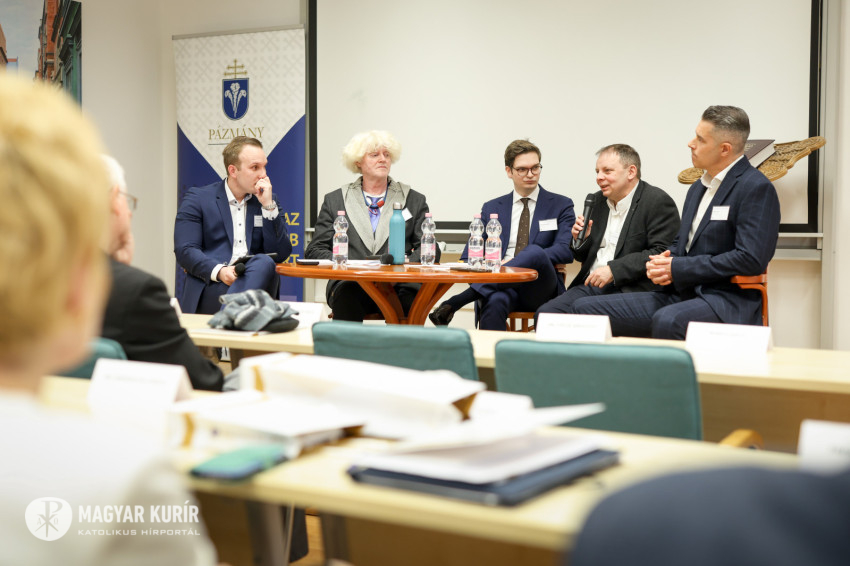
This was followed by a roundtable discussion featuring Norbert Filemon (Axioma), Péter “Sziámi” Müller, Csaba Menczer (Neumann Technology Platform), and László Trautmann (Corvinus University of Budapest). The moderator was Dávid Petneházy (Promotheus Agency). The participants in the discussion pointed out that
"today, when it comes to the use of AI, power interests easily override ethical considerations."
They emphasized that AI will eliminate mediocrity, yet AI takes over fast thinking, not slow thinking. The discussion also touched on the Hungarian AI Coalition, which was established with the participation of international and domestic companies, universities, research labs, and professional and public administration organizations. The participants also noted that AI errors often cost human lives. Another major question is whether a language model can be value-neutral, or only objective?
"The starting point for AI development was humane, driven by good intentions, so ultimately it is up to us to decide what we use it for and how."
This is well illustrated by the ongoing debate between Anthropic and OpenAI: in military applications, can the machine make decisions? Can AI be used to monitor individuals? Can various platforms be used for direct advertising purposes?
The meeting continued online in the afternoon, with the participation of international speakers.
Photos: Merényi Zita / Magyar Kurír
https://www.magyarkurir.hu/hirek/ember-es-gep-hataran-mesterseges-intelligenciarol-rendeztek-nemzetkozi-konferenciat-pazmanyon