Mission and objectives of the research group
The Research Institute focuses on basic questions and fundamental concerns of the human person. Its interdisciplinary work addresses the psychological and social dimensions of human experience across the lifespan, including death and dying.
One major focus is the advancement (advancement: anders, weniger ideologisch, mehr forschend) of the meaning- and person-oriented psychological and psychotherapeutic research tradition founded by the Viennese psychiatrist, neurologist, and existential philosopher Viktor E. Frankl (1905–1997), that is, logotherapy and existential analysis, as well as its intellectual predecessors, such as Max Scheler (1874–1928) and Rudolf Allers (1883–1963). Studium der personalistischen und non-reduktiven Tradition in der klinischen Psychologie und Psychotherapie.
Ein weiterer central focus is the psychology of death and dying, as observed, for example, in end-of-life experiences, near-death experiences, and unexpected lucid episodes occurring shortly before death. Against this background, the Institute studies the psychological and inner experience of dying as well as the experiences of relatives and caregivers. Particular attention is given to questions of personhood as they emerge in the context of death and dying, and to how professionals in the helping professions can integrate recent insights into the complexity of dying into everyday clinical practice.
The Institute conducts interdisciplinary research on terminal lucidity (i.e., unexpected episodes of cognitive clarity in dying patients) and has published several landmark contemporary studies on this phenomenon. In this context, the Institute collaborates with the Mayo Clinic (Rochester, USA) on the LEAD (Lucid Episodes in Alzheimer’s and Dementia) study.
Head of the research group
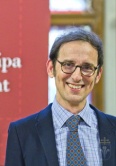
Prof. Dr. Alexander Batthyany
E-mail: alexander.batthyany@ppke.hu
Books:
- (2023). Die Welt ist nicht heil, aber heilbar (with E. Lukas). Innsbruck: Tyrolia.[translated into Spanish and Portuguese]
- (2023). Threshold: Terminal Lucidity and the Border of Life and Death. New York: St. Martin’s Press (Essentials) [translated into Spanish, Chinese, Slovenian, Russian, Japanese]
- (2024). Das Licht der letzten Tage: Das Phänomen der Geistesklarheit am Ende des Lebens. Munich: O.W. Barth.
- (2024). Rückkehr zum Psychologismus? Zur Aktualität von Viktor Frankls Kritik an Alfried Längle (with A. Kalender). Würzburg: K&N.
- (2025). Broken Lineage: Viktor Frankl, Alfried Längle, and the Division of Logotherapy and Existential Analysis. New York: The Psyche Press [translated into Russian].
Articles:
Griffin, J. M., Kim, K., Finnie, D. M., Lapid, M. I., Gaugler, J. E., Batthyány, A., ... & Frangiosa, T. (2024). Developing and describing a typology of lucid episodes among people with Alzheimer's disease and related dementias. Alzheimer's & Dementia, 20(4), 2434-2443.
Batthyány, A. (2024). Terminal Lucidity: The Need for Accuracy and Integrity. Journal of Near-Death Studies, 41(1).
Batthyány, A. (2024). “For the Person Is Always at Work”: Viktor Frankl’s Path to Logotherapy and Existential Analysis. In Logotherapy and Existential Analysis (pp. 3-24). Cham: Springer International Publishing.
Griffin, J. M., Bangerter, L. R., Kim, K., Lapid, M. I., Finnie, D., Liu, Y., Batthyány, A. & Gilmore-Bykovskyi, A. (2025). Lucid episodes in people with advanced dementia: characterizing caregiver reports to advance definition and measurement of episodes. The Gerontologist, 65(12), gnaf282.
Griffin, J. M., Bangerter, L. R., Kim, K., Liu, Y., Batthyány, A., Birkeland, R. W., ... & Lapid, M. I. (2025). Lucid episodes among people with Alzheimer’s disease and related dementias and their impact on family caregiver stress and grief (LEAD): protocol for a longitudinal observational study. British Medical Journal open, 15(7), e098182.
Batthyány, A. (2026). Reaffirming Definitional Clarity in Terminal and Paradoxical Lucidity: Reply to Michael Nahm. Journal of Near-Death Studies, 43(1).